
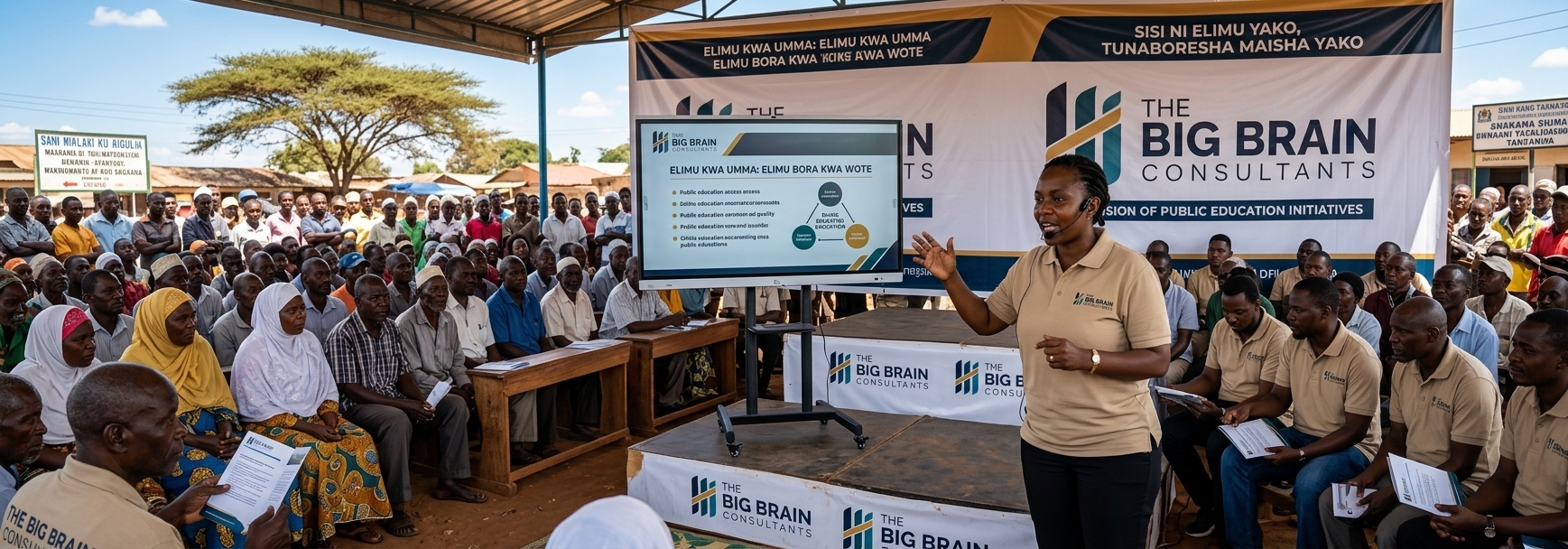
Almost every household and small enterprise decision — what to buy, whether to borrow, what to plant, when to sell — is an economic decision. These sessions give people a working understanding of the forces behind those decisions, so the choices they make are informed rather than reactive.
Who it's for
Individuals, community groups, small traders, farmers, local leaders, staff groups and institutions who want a clear, practical understanding of the economic environment they operate in.
Common situations
- Assumptions about the economy that are widely held, widely repeated and frequently inaccurate.
- Household and enterprise decisions made without reference to trends that directly affect them.
- Very little practical knowledge of how national priorities, prices and policy reach community level.
- A sense that economic change happens elsewhere, and that there is nothing useful to be done about it.
How we work
-
01
Agree the audience, the setting and the specific economic questions participants want addressed.
-
02
Prepare clear, plain-language material on current priorities, price trends and local relevance.
-
03
Deliver the session with discussion and questions, using local examples wherever possible.
-
04
Point participants to practical follow-up — the institutions, records and next steps worth pursuing.
What the sessions cover
- National economic priorities and what they mean locally
- Inflation, prices, interest and the cost of living
- Where money and opportunities are actually moving
- How policy and public spending reach the community
- Reading economic news and statistics critically
- Practical responses available to households and small enterprises
Our goal
Enable people to read their economic environment accurately and act on it deliberately.
Before we begin
An indication of the audience, venue and approximate participant numbers, together with any local economic issues or sectors participants would most like covered.