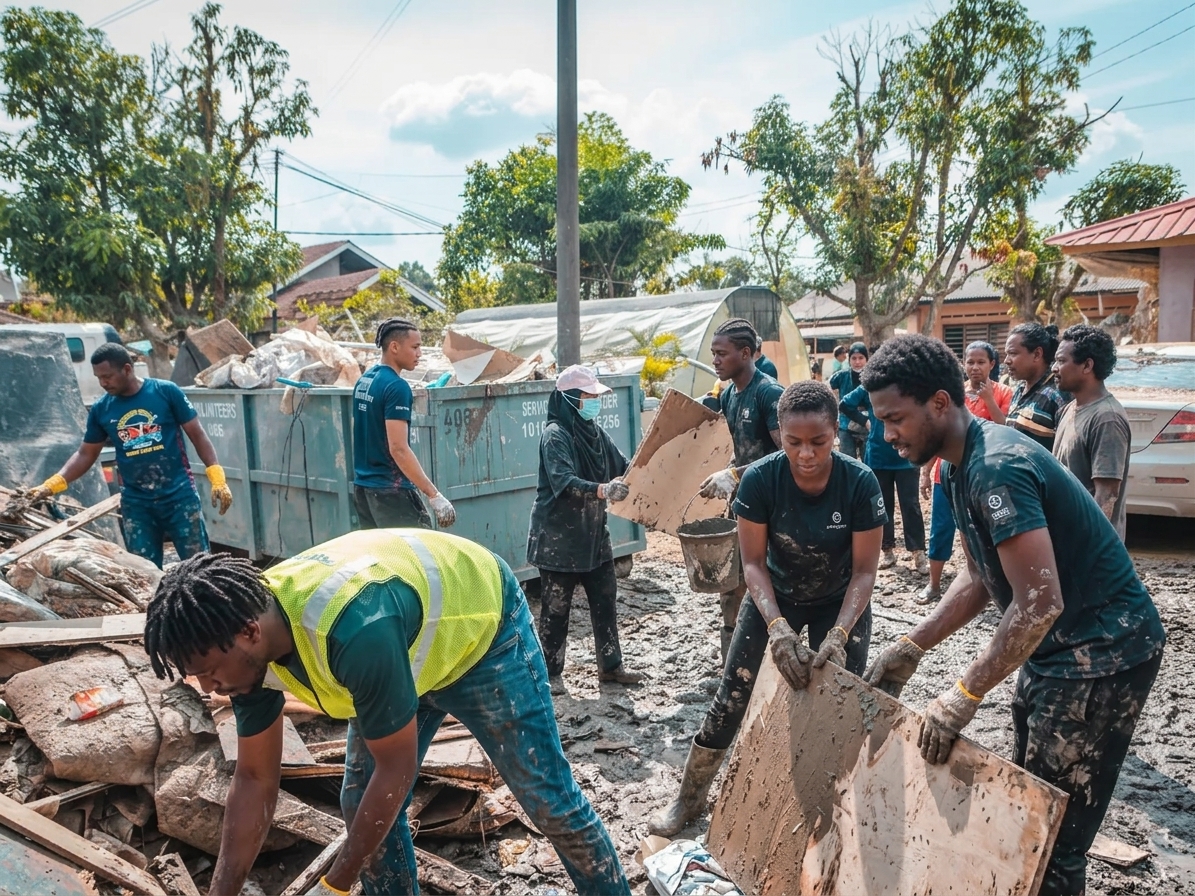
After a disaster, the damage to buildings is obvious and the damage to people is not. Recovery that ignores the second tends to stall. We help communities understand what they are experiencing, connect with the support that exists, and rebuild the practical base — livelihoods, small enterprises and household stability — that a return to normal depends on.
Who it's for
Affected communities and households, community leaders, local government and institutions, and businesses whose staff and operations have been disrupted.
Common situations
- Affected people with no clear route to the support that exists, and often no idea that it exists.
- Distress that goes unrecognised because the effects of trauma are not understood as trauma.
- Livelihoods and small enterprises destroyed, with no plan for how to restart them.
- Recovery effort driven by goodwill but lacking structure, coordination and sequencing.
- Entitlements, records and documentation not organised at the point where they are needed.
How we work
-
01
Listen first — meet the community and understand what happened, what was lost, and what people are actually asking for.
-
02
Map the support, services and entitlements available, and connect people to those they are eligible for.
-
03
Facilitate community education and group sessions on trauma awareness, resilience, emotional well-being and healthy coping.
-
04
Support the practical recovery of livelihoods, small enterprises and household financial stability.
-
05
Follow up as recovery progresses, and adjust support to what the community reports it still needs.
What the sessions cover
- Trauma awareness and the common effects people experience afterwards
- Resilience, emotional well-being and healthy coping
- Recognising when professional help is needed, and how to seek it
- Accessing available services, entitlements and support
- Household financial recovery and prioritisation of limited resources
- Restarting and stabilising small enterprises and livelihoods
- Group coping, mutual support and community resilience
Our goal
Support communities to recover both the practical base and the stability that recovery actually requires.
Before we begin
The location and nature of the disaster, who is coordinating the response, the number and profile of affected households, and any recovery work already underway. Where a specific community is not yet identified, this practice area is engaged through the responsible authorities or partner organisations.